

























International Criminal Court (ICC) on Tuesday issued arrest warrants for two senior Taliban leaders, accusing them of crimes against humanity over the systemic persecution of women and girls in Afghanistan.
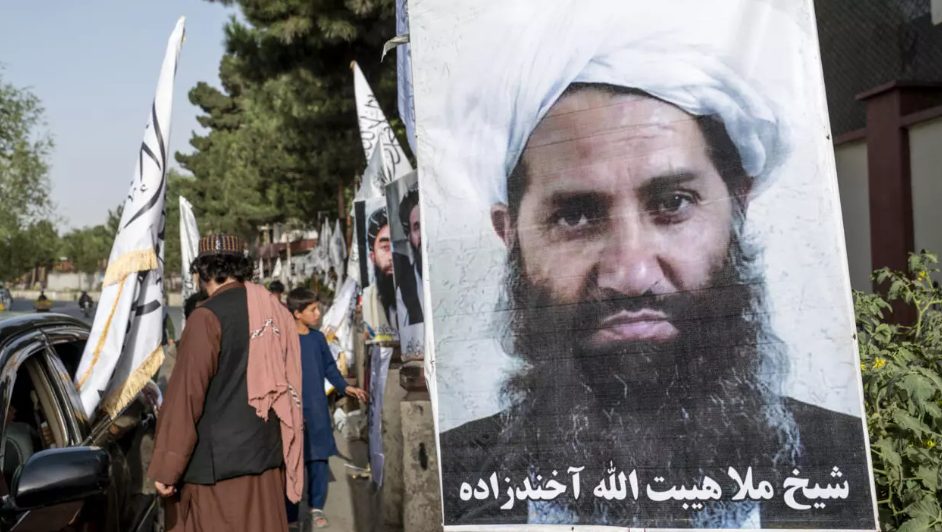
In a statement, ICC judges said there were “reasonable grounds” to believe that Taliban Supreme Leader Hibatullah Akhundzada and Chief Justice Abdul Hakim Haqqani were responsible for gender-based persecution, citing widespread violations of the rights of women and girls under the Taliban’s rule.
“While the Taliban have imposed certain rules and prohibitions on the population as a whole, they have specifically targeted girls and women by reason of their gender, depriving them of fundamental rights and freedoms,” the court said.
The ICC outlined a range of alleged violations, including severe restrictions on the rights to education, privacy, and family life, as well as curbs on freedom of movement, expression, thought, conscience, and religion. The court also cited persecution based on expressions of sexuality and gender identity, which the Taliban deemed incompatible with their policies on gender.
The alleged crimes were said to have been committed from August 15, 2021—when the Taliban returned to power in Kabul, through at least January 20, 2025.
The ICC, headquartered in The Hague, investigates and prosecutes the gravest international crimes, including war crimes, genocide, and crimes against humanity. While it has no enforcement arm of its own, member states are obligated to carry out arrests, though compliance has been inconsistent.
Following their takeover, the Taliban promised a more moderate approach compared to their first regime from 1996 to 2001. However, the group swiftly imposed sweeping restrictions on women’s rights, prompting the United Nations and human rights groups to characterize their policies as “gender apartheid.”
Women and girls have been banned from secondary and tertiary education, prohibited from many forms of employment, and denied access to public spaces such as parks, gyms, and beauty salons. Movement is restricted without a male chaperone, and laws regulating public morality have silenced female voices in poetry and song.
When the ICC prosecutor Karim Khan requested the arrest warrants earlier this year, he warned that Afghan women, girls, and LGBTQ individuals were suffering “unprecedented, unconscionable and ongoing persecution.”
“Our action signals that the status quo for women and girls in Afghanistan is not acceptable,” Khan said at the time, adding that more arrest warrants for Taliban officials may follow.